


Every creator has been here. You spend an hour filming and editing a Reel. You hover over the share button. And your stomach turns a little. What if your followers hate it? What if it tanks and drags down the next three posts? What if it's just off-brand enough that people start unfollowing?
For about 18 months now, Instagram has had a feature that quietly solves exactly this problem — and almost no one is using it.
It's called Trial Reels. It lets you publish a Reel that's only visible to non-followers for 72 hours, completely hidden from your existing audience. If it lands, you can share it with your followers (or let Instagram do it automatically). If it flops, it disappears without anyone you know ever seeing it.
It's the closest thing Instagram has ever built to a reset button on content risk. And based on Meta's own data, only a small fraction of eligible creators are actually using it.
Here's the full breakdown of how Trial Reels actually work in 2026, the strategic uses most articles get wrong, and why this feature matters more than its quiet launch suggests.
A quick note: if you'd rather have a team handling the growth side of Instagram while you focus on creating content worth testing, here's how our service works. Otherwise, read on.
What Trial Reels actually are
A Trial Reel is a normal Reel with one toggle flipped on before you post.
Once published, the Reel enters Instagram's unconnected recommendation system — the algorithm that handles content distribution to people who don't follow you (Explore, the Reels feed for non-followers, suggested posts). Your own followers don't see it in their Feed. It doesn't appear on your profile grid. It's hidden from your Reels tab. It's even excluded from hashtag search results during the trial window.
For 72 hours, Instagram measures how non-followers respond. After that:
- If it cleared an internal performance threshold → Instagram can auto-share it to your followers and add it to your profile grid
- If it didn't clear the threshold → it stays in your private "Trials" tab, invisible to your audience, with zero damage to your main account
- At any point, you can manually share it to your followers if you decide it's worth it
That's the entire mechanic. It's been live since December 10, 2024, expanded to all creators with 1,000+ followers in early 2026, and got scheduling support added in February 2026. Despite that runway, most creators still don't know it exists or use it incorrectly.
What Mosseri said that explains why this exists
The clearest framing of the feature came from Adam Mosseri himself. In a clip explaining the launch, he described Trial Reels as a way to:
"Skip the entire connected ranking system and instead go directly to unconnected recommendations, which means you avoid overwhelming your followers with excessive content."
That last line is the whole point.
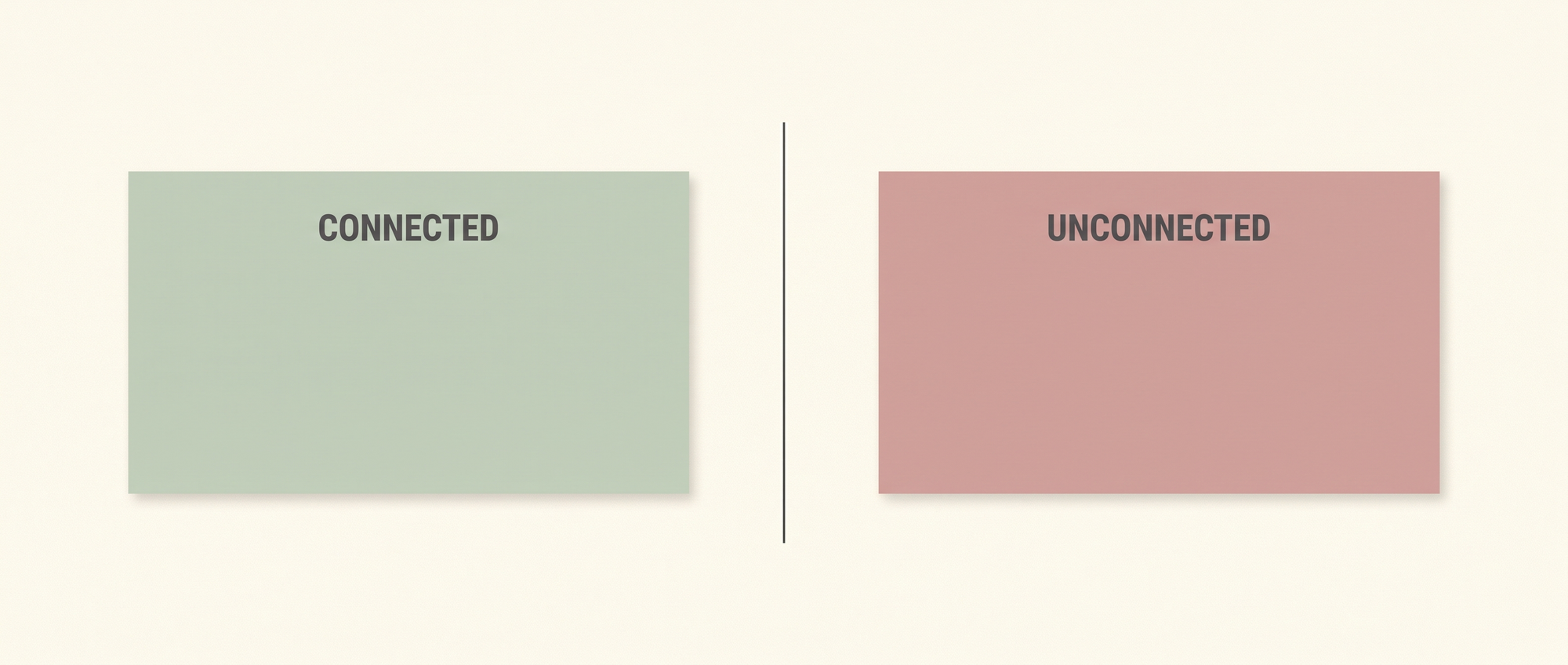
Instagram has two parallel distribution systems running in 2026:
- Connected ranking — content shown to your followers (Feed, Stories, Reels for people who follow you)
- Unconnected recommendations — content shown to non-followers (Explore, the Reels feed for non-followers, suggested posts in Feed)
Trial Reels separate the experiment from the audience. You can run content through the unconnected recommendation system without ever touching the connected one. Your followers' trust in your content stays intact. Your experiment runs anyway.
This is structurally different from anything Instagram has offered before. For the first time, creators can post without committing to their existing audience seeing it.
How it actually performs (the honest part)
Here's what most coverage skips. Trial Reels almost always get less reach than regular Reels.
Mosseri has confirmed this directly. The reason is mechanical: Trial Reels lack the initial engagement boost from your existing followers — and that early engagement is one of the strongest signals the algorithm uses to decide whether to push a Reel into wider distribution. Without it, the algorithm has less data to work with, so it distributes more cautiously.
This doesn't mean Trial Reels are broken. It means you should never compare a Trial Reel to your regular Reels. Compare it only against other Trial Reels in your niche, against similar content categories, and against an internal benchmark Instagram derives from your past performance.
Two more nuances most guides miss:
- Trial Reels are ranked separately from your normal Reels. A flop won't drag down the performance of your next regular post. This is the safety net that makes the feature genuinely useful.
- Your followers can still occasionally encounter a Trial Reel. If someone DMs them the Reel, or if they land on a page aggregating Reels by the same audio, location, or filter, they may see it. Instagram isn't encrypting the Reel — just controlling its main distribution path.
How to use Trial Reels strategically (the framework most creators miss)

Most creators using Trial Reels use them as a content test: post one, watch the metrics, decide whether to share. That works, but it misses the bigger opportunity.
Here's the framework that actually compounds:
1. Test hooks, not topics
The single highest-value use of a Trial Reel is a controlled A/B test on the opening of a Reel. Same core content, two different first-three-second hooks. Run both as Trial Reels in the same week. Whichever earns more reach with non-followers tells you which hook your real audience will probably respond to too.
This is dramatically more useful than "let me try a new niche." You're not testing whether your audience wants different content — you're testing how to get strangers to stop scrolling on the content you already make.
2. Test niche adjacency before you commit
If you've been thinking about expanding into a related topic (a fitness coach considering nutrition content; a real estate agent considering interior design content), Trial Reels are how you find out whether your existing audience and the wider algorithm will reward it — without staking a feed slot on the experiment.
Post three Trial Reels in the adjacent niche over two weeks. If they consistently outperform your trial baseline, the topic is worth committing to. If they consistently underperform, you've learned for free.
3. Repurpose your own winning content
Instagram's originality policy — expanded from Reels to carousels on April 30, 2026 — penalises accounts that repost other people's content. But it doesn't penalise you for reworking your own. Take your top-performing original ideas from the last six months and rebuild them as Trial Reels with fresh hooks. If they re-perform, share with everyone. If they don't, you've kept your grid clean.
4. Volume test, but only with intent
Trial Reels make it safe to post at higher volume because flops don't touch your profile. Some creators use this for sheer volume — posting 10 trial Reels a week and sharing the top 2 publicly.
This works, but only if every test is teaching you something. Posting 10 Reels because the feature is "free" wastes your time and Instagram's algorithm cycles. Posting 10 Reels with a hypothesis attached to each one builds a real understanding of what your audience and the broader algorithm actually rewards.
Three mistakes that waste your trials
1. Comparing Trial Reels to your regular Reels. They're scored against different baselines. Your regular Reel got the connected-ranking boost; your Trial Reel didn't. Comparing the raw numbers tells you nothing.
2. Re-uploading old Reels as Trial Reels. This isn't what the feature is for. Trial Reels are for fresh content — new hooks, new formats, new ideas. Resubmitting yesterday's Reel as a Trial Reel doesn't generate useful data, and may trigger originality flags.
3. Treating Trial Reels as a volume hack. Some creators are now posting AI-generated trial Reels in bulk to game the system. Beyond the obvious quality problem, Instagram's broader push toward raw, real human content means high-volume AI Reels are increasingly easy for the algorithm to deprioritise. Trial Reels are powerful as a test, not as a content factory.
Why this feature matters more than its quiet launch suggests
Here's the part that's easy to miss. Trial Reels are a small feature with a larger implication.
Instagram has now formally split its algorithm into two distribution systems — connected and unconnected — and given creators the ability to access one without touching the other. That's a structural shift. It means the platform is increasingly happy for creators to operate in two modes simultaneously: one for the audience they have, one for the audience they want.
The accounts that compound fastest in 2026 are going to be the ones using this distinction strategically. They'll be running consistent, on-brand content for their existing followers (connected ranking) while continuously testing new ideas with strangers (unconnected recommendations) — and they'll be doing both without the two interfering with each other.
The catch, of course, is that Trial Reels only test whether content works. They don't make sure the right people see it once it goes wide. The unconnected recommendation system rewards content that earns real engagement from real humans in your target audience — which is the part most creators struggle with even after a successful trial.
This is what Social Boost handles for our clients. Real people on our team manually engage with the right accounts in each client's niche every weekday, building the human engagement signals that get Trial Reels' winners to reach wider audiences once you share them publicly. The feature gives you the test; we make sure the winner gets seen.

The simple version
- Trial Reels show your Reel to non-followers only, for 72 hours, hidden from your followers
- You need a public Creator or Business account with 1,000+ followers to access it
- Trial Reels almost always get less reach than regular Reels — Mosseri confirmed it. Compare them only to other Trial Reels.
- They're ranked separately, so flops don't drag your account down
- The strategic uses: A/B test hooks, niche adjacency, repurposing winners, volume testing with hypotheses
- The feature gives you the test. Real engagement from real humans is what turns Trial Reels' winners into actual growth.
Trial Reels are the most underused feature on Instagram in 2026. The creators systematically using them are quietly gaining a real edge — they only show their followers content that's already been validated by strangers, while running constant experiments in the background.
If you'd like a real team handling the engagement side while you focus on testing and creating content the algorithm rewards, that's what we do.
See plans → from $129/month, no contract, cancel any time. 30-day money-back guarantee.